
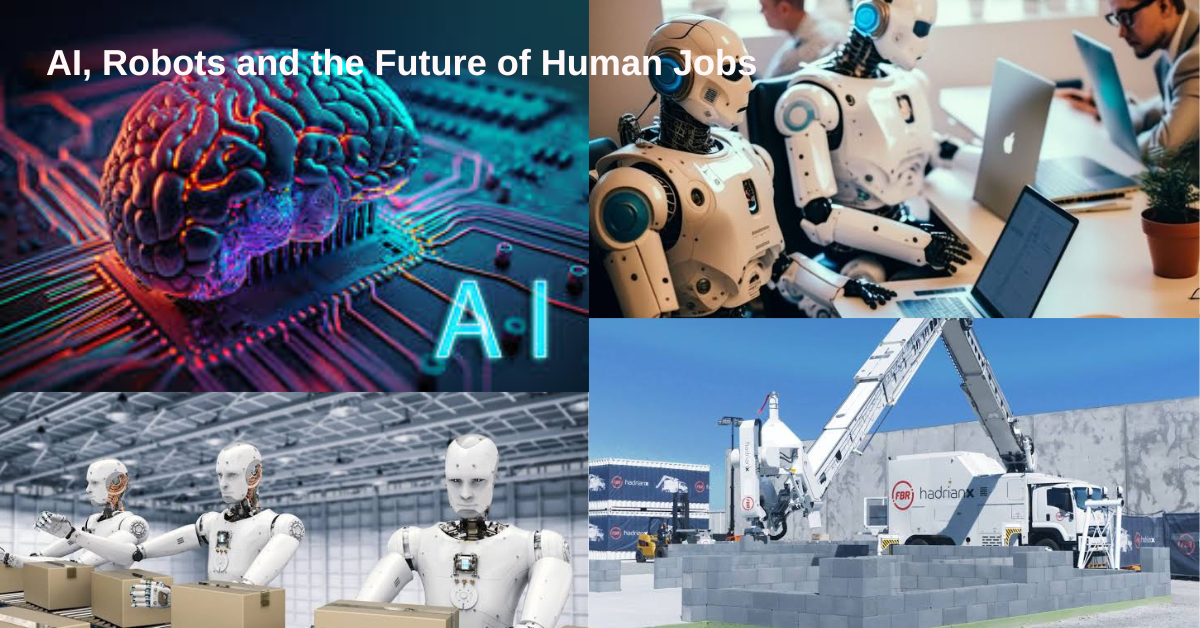
Picture this in your mind: It’s 2035, and you’re sipping your coffee (or trying to—because your AI assistant keeps refilling it at the wrong temperature).
As you glance at your calendar, your AI scheduler pings, “Meeting in 5 minutes with Mr. Botman—your new manager.”
You’re no longer in the driver’s seat of your career—literally.
Autonomous cars are shuttling everyone around, while AI-powered accountants, lawyers, and even artists are thriving in jobs once reserved for humans.
Terrified yet?
You’re not alone.
AI is revolutionizing industries faster, and this is raising a big, scary question: What happens to us, the humans?
Let’s take a deep dive into the brave new world of AI and its impact on jobs, careers, and our future as entrepreneurs and professionals.
Spoiler alert: It’s not all doom and gloom. Stick around for the solutions, because yes, there’s a way to thrive—even if robots take over half the workforce.
AI Isn’t Coming—It’s Already Here
From your Netflix recommendations to self-checkout kiosks, AI has quietly (and not-so-quietly) infiltrated our daily lives.
But while AI is great at making life more convenient, it’s also a major disruptor in the workplace.
Here’s what’s happening:
Automation Explosion: A study by McKinsey Global Institute predicts that by 2030, up to 30% of current jobs could be automated. That’s roughly 400 million jobs globally. Jobs in transportation, manufacturing, retail, and even healthcare are at the highest risk.
Rise of the Super-AI: Generative AI, like OpenAI’s ChatGPT, is capable of writing, coding, designing, and even creating art. It’s not just replacing entry-level jobs but also challenging creative and knowledge-based roles.
Why This is a Big Deal:
AI doesn’t sleep, complain, or take lunch breaks.
It’s efficient, cheap (in the long run), and doesn’t require sick leave.
For businesses, that’s a dream.
For workers? Well, let’s say it’s a bit of a nightmare.
Will AI Take Over My Job? (And Should I Panic?)
The short answer: Maybe. The long answer: It depends on your job, your skills, and how well you adapt to change.
According to the World Economic Forum’s Future of Jobs Report, while AI is expected to displace 85 million jobs by 2025, it’s also fore-casted to create 97 million new roles.
These aren’t your typical 9-to-5 gigs. We’re talking about jobs like AI trainers, ethics officers, and robot psychologists (yes, really).
But here’s the catch:
The new roles that will be created requires up-skilling.
If your current job revolves around repetitive tasks, it’s time to start thinking about how to pivot.
Creativity, emotional intelligence, and complex problem-solving—skills that machines struggle to replicate—will be your golden ticket.
Why AI Can’t Fully Replace Humans
Despite its incredible capabilities, AI isn’t perfect.
It lacks emotional intelligence, creativity (the kind that wins Oscars, not generates memes), and ethical judgment.
For example:
AI Bias:
Even the smartest algorithms can reflect the biases of their creators.
From hiring processes to loan approvals, biased AI has made headlines for all the wrong reasons. A human touch is still crucial to ensure fairness.
The Empathy Gap:
Robots don’t “get” us—at least not yet.
They can analyze your mood based on your tone, but they can’t genuinely comfort you when you’re stressed or struggling.
Ethics and Accountability:
If an AI system makes a mistake, who’s responsible? Humans are still needed to navigate these gray areas.
In short, there will always be jobs where the “human factor” is irreplaceable. Your mission is to position yourself in those roles.
How to Stay Relevant in the Age of AI
So, what’s the game plan if AI and robots are eyeing your paycheck? It’s time to future-proof your career.
Here’s how:
Upskill, Upskill, Upskill
Invest in learning skills that are complementary to AI, like coding, data analysis, or AI systems management.
Platforms like Coursera, Udemy, and LinkedIn Learning are great places to start.
Focus on Creativity and Emotional Intelligence
AI can mimic creativity, but it can’t replicate the human spark.
Focus on roles that require storytelling, big-picture thinking, or building deep relationships with people.
Embrace Entrepreneurship
AI is a tool—learn to use it to your advantage.
Entrepreneurs who leverage AI for efficiency will be the ones leading industries, not losing jobs to them.
Stay Curious
The job market will keep evolving.
Lifelong learning isn’t optional anymore; it’s a survival skill.
Stay curious and stay adaptable.
The Silver Lining: AI as Your Ally
Here’s the good news: AI isn’t just taking jobs; it’s also making life easier. Think about it:
Increased Efficiency: AI handles the grunt work, giving you more time to focus on strategy and innovation.
Opportunities for Collaboration: Pairing human creativity with AI’s efficiency can lead to groundbreaking ideas.
For example, musicians are using AI tools to compose songs, and architects are designing futuristic cities with the help of AI simulations.
More Time for the Good Stuff: With AI doing the mundane tasks, humans can focus on what truly matters—whether that’s building businesses, pursuing hobbies, or simply spending time with loved ones.
Final Thoughts: It’s Not the End of the World—It’s a New Beginning
Yes, AI is changing the job landscape, but change isn’t inherently bad.
Every major technological leap—think the Industrial Revolution—has caused disruption but also opened the door to new opportunities.
The key here is to adapt, innovate, and embrace the possibilities.
So, the next time someone says, “AI is going to steal all our jobs,” respond with a smile and say, “Not mine—I’m learning to work with it, not against it.”
Remember, the robots may be faster, but they’ll never have your charm, creativity, or perfectly timed sarcasm.
And trust me, that’s what will keep you winning in this AI-driven world.
What’s your take on AI and the future of jobs? Share your thoughts in the comments, and don’t forget to subscribe to this blog for more eye-opening articles like this one!
About The Author





Interesting information. David, you did a great job sharing this….