
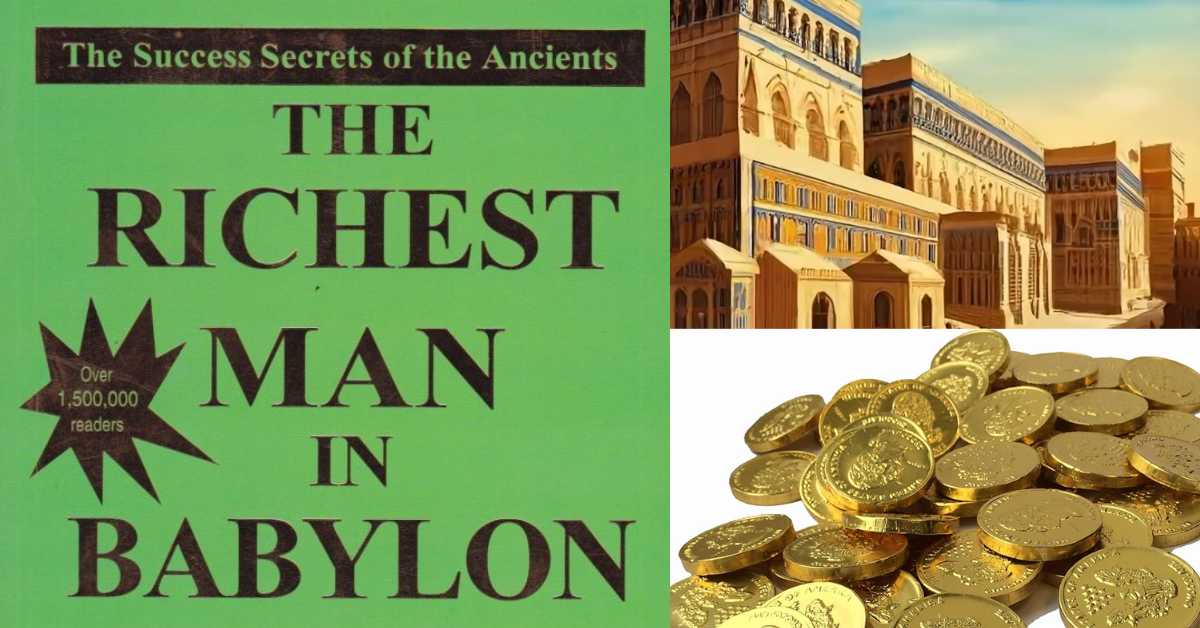
If there were a Holy Grail of financial wisdom, I’d bet it would look something like The Richest Man in Babylon.
That’s a book written by George S. Clason in 1926.
This little book packs a punch, using ancient Babylonian parables to teach timeless lessons on money, wealth, and personal growth.
The best part? The advice is simple but powerful—kind of like having your very wise (and possibly very ancient) friend whispering money secrets into your ear.
But before we dive into Babylon’s wealth secrets, let’s take a moment to talk about why reading books on money and self-improvement is like finding gold in the sand.
“A book is a garden, an orchard, a storehouse, a party, a company by the way, a counselor, a multitude of counselors.”
– Charles Baudelaire
Why You Should Make Friend With Books On Investing And Wealth Creation
Let’s be honest: we all want to make money, save money, and maybe even watch that money grow on its own.
But schools don’t teach much about money.
Sure, they’ll give you algebra, chemistry, and history, but when’s the last time you saw a class on “How to Stop Living Paycheck to Paycheck”?
That’s where books like The Richest Man in Babylon come in.
Wealth creation books distill years of wisdom into bite-sized pieces of advice.
They don’t just teach you about money; they show you how to develop discipline, self-control, and a healthy relationship with finances.
It’s like having a financially savvy friend who also happens to be your life coach.
Reading financial books can open your mind to new ideas, bust myths about money, and (hopefully) stop you from making the same mistakes others did.
As the wise Warren Buffett says, “The more you learn, the more you earn.” Knowledge compounds like interest, and over time, it makes you richer—financially and personally.
The Richest Man in Babylon
The Richest Man in Babylon isn’t your typical financial advice book.
It uses parables set in ancient Babylon, one of the world’s first major financial capitals, to teach wealth principles that still hold true today.
This story-based approach makes the advice easy to understand and remember, like a fairy tale for your bank account.
The book’s protagonist, Arkad, is the richest man in Babylon. He didn’t start out that way—he was just like everyone else, trying to make ends meet.
Through his journey, Arkad learns seven key principles of wealth, which he later shares with others.
Think of these as the “Babylonian Commandments of Money.”
Ready to unlock the secrets? Let’s dive in.
1. Start Thy Purse to Fattening: Save 10% of Your Income
The first rule of wealth?
Pay yourself first.
This isn’t about treating yourself to a fancy dinner but actually putting aside a portion of your earnings.
Arkad’s advice is simple: save at least 10% of what you earn.
Why it matters: If you save 10% of every paycheck, you’re not only building a financial cushion but also building a habit of disciplined saving.
And as modern finance gurus like David Bach put it, “The single most important factor to getting rich is to start saving and investing early.”
Pro Tip: Set up an automatic transfer to a savings or investment account each payday. You’ll barely miss it, and over time, you’ll see your “purse” getting heavier.
2. Control Thy Expenditures: Don’t Spend More Than You Need
Arkad teaches that controlling your expenses is key to wealth.
It’s not about depriving yourself; it’s about spending wisely. We all have “necessary expenses,” but are they really necessary?
Take a cue from this Babylonian wisdom and be mindful of where your money is going.
Can you cut back on that $5 daily latte? Is that gym membership you barely use really worth it?
Modern Twist: Today’s finance gurus echo this with advice on budgeting and “paying yourself first.”
According to a report by the Bureau of Labor Statistics, Americans spend a significant chunk of their income on non-essential items, leaving little for savings or investments.
If we could all “control thy expenditures,” we’d be much closer to financial freedom.
3. Make Thy Gold Multiply: Invest Wisely
It’s not enough to save; you need to make your money work for you. Arkad suggests that you “put each coin to laboring” by investing it so that it grows.
Today, this is where investments like stocks, real estate, or even index funds come into play.
Legendary investor John Bogle, the founder of Vanguard, was a big advocate of this: “Investing isn’t about beating others at their game. It’s about controlling yourself at your own game.”
Pro Tip: Start with low-risk investments or index funds if you’re new.
The power of compounding can turn small, regular investments into a significant sum over time.
4. Guard Thy Treasures from Loss: Don’t Take Unnecessary Risks
When it comes to your hard-earned money, remember the golden rule: don’t risk what you can’t afford to lose.
Arkad’s advice here is to avoid any “get-rich-quick” schemes and focus on solid, steady investments.
Translation for Modern Times: Be cautious with “too-good-to-be-true” opportunities.
Think twice before putting your money into risky ventures or new, unproven schemes.
According to the Financial Industry Regulatory Authority (FINRA), scams often target those looking for quick profits.
Play it safe, and don’t let greed lead you into trouble.
5. Make of Thy Dwelling a Profitable Investment: Own Your Home
Arkad believed that owning your own home is a wise financial decision.
Instead of paying rent to someone else, why not invest in a home that builds your wealth?
Modern Perspective: Today, home-ownership is still considered a cornerstone of financial stability, although it comes with caveats.
Real estate can be a solid investment, but don’t rush into buying if you’re not financially prepared.
Zillow’s research shows that the average American homeowner builds wealth over time, with the average home price appreciating by about 3.8% annually.
Pro Tip: Don’t overstretch for a dream home.
Start with something modest and build equity.
If you decide to move, rental income can add to your wealth.
6. Ensure a Future Income: Prepare for Retirement
Arkad emphasizes the importance of setting up a financial plan for the future.
Whether it’s old age, illness, or other uncertainties, a secure financial plan can give you peace of mind.
Modern Advice: This translates into retirement planning and setting up an emergency fund.
The Social Security Administration reports that one-third of U.S. retirees rely solely on Social Security for retirement, which isn’t ideal.
A 401(k), IRA, or Roth IRA can help supplement Social Security, giving you a comfortable future without financial worry.
7. Increase Thy Ability to Earn: Keep Learning
Arkad’s last lesson is all about self-improvement.
Increasing your earning power is just as important as saving or investing.
The more valuable you are to the marketplace, the higher your income potential.
Modern Example: Consider this the Babylonian equivalent of “personal development.”
Investing in yourself—whether it’s learning a new skill, getting a certification, or taking a course—will pay off in higher earnings.
As self-development guru Jim Rohn said, “Income seldom exceeds personal development.”
Building Wealth, One Lesson at a Time
In the grand scheme of things, wealth creation isn’t about making a single “big win” but developing consistent habits that grow over time. Arkad’s advice in the book – “The Richest Man In Babylon” is deceptively simple, and that’s why it’s so powerful.
Start by saving, control your spending, make wise investments, avoid unnecessary risks, plan for the future, buy a home when you can afford it, and never stop learning.
These principles might sound basic, but as any personal finance expert will tell you, the basics are what work.
This ancient knowledge book proves that these basics have worked for centuries.
So, why not give The Richest Man in Babylon a read if you haven’t already? (Or revisit it if you have!)
This little book might be nearly a century old, but it could be the most valuable addition to your personal finance library.
As the Babylonian proverb says, “Advice is one thing that is freely given away, but watch that you only take what is worth having.”
Final Thought: Start small, stay consistent, and remember, wealth is a journey, not a destination.
The true riches are in the habits you build and the life you create along the way.
“It wasn’t until I started reading and found books they wouldn’t let us read in school that I discovered you could be insane and happy and have a good life without being like everybody else.”
– John Waters
Also read: 8 Ways To Join The Billionaires Club
About The Author






Be First to Comment